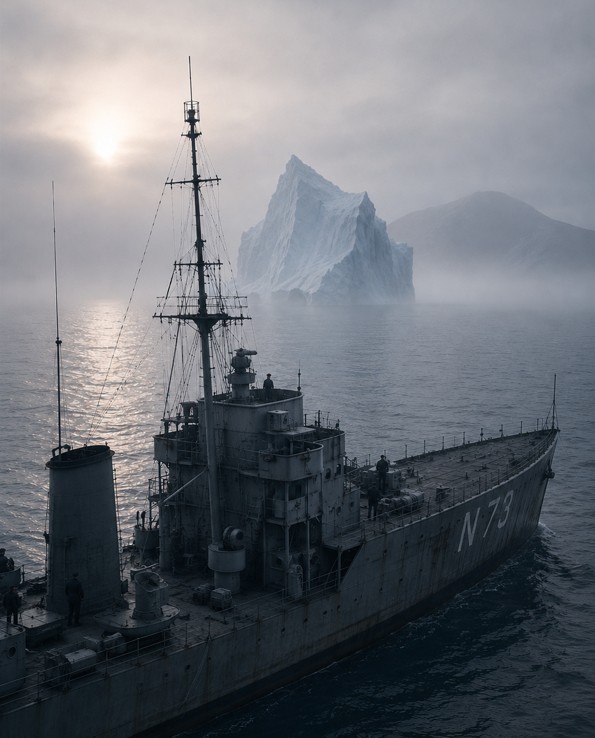
On this day in 1942, five Allied ships were sunk, two more were damaged, and more than 120 men lost their lives after a convoy inadvertently sailed into a minefield.
The minefield had been laid by friendly forces.
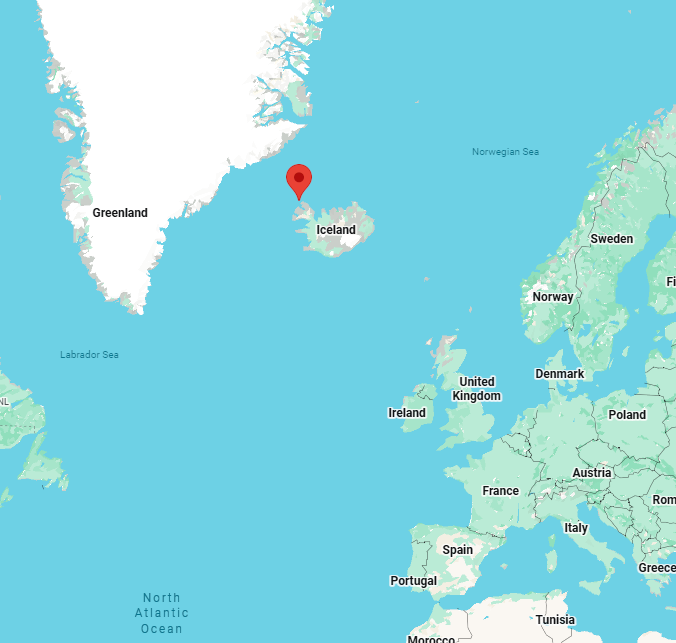
Following the successful delivery of supplies to the Soviet Union, Convoy QP-13 departed Murmansk for Iceland under the escort of the Royal Navy minesweeper HMS Niger. Its planned route would take it safely around the Northern Barrage, a vast British minefield designed to restrict German naval access to the Atlantic.
As the convoy approached Iceland, visibility deteriorated in dense Arctic fog. At some point, Niger’s commanding officer believed he had identified the north-west coast of Iceland and altered course accordingly.
It wasn’t the coast. It was an iceberg.
Unknowingly, Niger led the convoy directly into one of Britain’s own minefields. Niger struck a mine and sank rapidly. Merchant vessels Heffron, Hybert, Massmar, and Rodina were also lost, while John Randolph and Exterminator suffered severe damage. More than 120 sailors from Niger perished, with only eight crew members surviving.
Imagine being the commanding officer. Visibility is barely a nautical mile. You believe you’ve fixed your position and made the correct navigational decision. Minutes later, your ship explodes, followed by the merchant ships you are responsible for protecting.
Those responding to the disaster would not initially have known whether they were dealing with a submarine attack or a minefield, it would have been chaos.
The tragedy of QP-13 reinforces one of the most enduring lessons in mine warfare. More than 80 years later, technology has changed, but the principle remains the same: accurate navigation and effective information management save lives.
Whether using paper charts in 1942 or digital command-and-control systems today, success depends on maintaining an accurate, accessible, and trusted understanding of the battlespace. Navigation, record management, and information sharing remain fundamental to preventing losses to friendly forces, commercial shipping, and neutral vessels alike.
The loss of QP-13 is a sobering reminder that sea mines are inherently indiscriminate weapons. Once laid, they threaten friend and foe alike unless the information surrounding them is managed with absolute precision.
Leave a Reply
You must be logged in to post a comment.